

Some favourite poets from the past

Judith Wright
Woman to Man
The eyeless labourer in the night
the selfless, shapeless seed I hold,
builds for its resurrection day —
silent and swift and deep from sight
foresees the unimagined light.
This is no child with a child’s face;
this has no name to name it by:
yet you and I have known it well.
This is our hunter and our chase.
the third who lay in our embrace.
This is the strength that your arm knows,
the arc of flesh that is my breast,
the precious crystals of our eyes.
This is the blood’s wild tree that grows
the intricate and folded rose.
This is the maker and the made;
this is the question and reply;
the blind head butting at the dark
the blaze of light along the blade.
Oh hold me, for I am afraid.
South of My Days
South of my days’ circle, part of my blood’s country, rises that tableland, high delicate outline of bony slopes wincing under the winter, low trees, blue-leaved and olive, outcropping granite- clean, lean, hungry country. The creek’s leaf-silenced, willow choked, the slope a tangle of medlar and crabapple branching over and under, blotched with a green lichen; and the old cottage lurches in for shelter.
O cold the black-frost night. The walls draw in to the warmth and the old roof cracks its joints; the slung kettle hisses a leak on the fire. Hardly to be believed that summer will turn up again some day in a wave of rambler-roses, thrust it’s hot face in here to tell another yarn- a story old Dan can spin into a blanket against the winter. Seventy years of stories he clutches round his bones. Seventy years are hived in him like old honey.
Droving that year, Charleville to the Hunter,
nineteen-one its was, and this drought beginning:
Sixty-head left at the McIntyre, the mud round them. hardened like iron; and the yellow boy died
in the sulky ahead with the gear, but the horse went on, stopped at Sandy Camp and waited in the evening, it was the flies we seen first, warming like bees.
Came to the Hunter, three hundred head of a thousand–cruel to keep them alive — and the river was dust.
Or mustering up the Bogongs in the autumn
when the blizzards came early. Brought them down; we brought them down, what aren’t there yet? Or driving for Cobb’s on the run
Up from Tamworth – Thunderbolt at the top of Hungry Hill, And I give him a wink. I wouldn’t wait long, Fred, not if I was you. The troopers are just behind, Coming for that job at the Hillgrove. He went like a luny, him on his big black horse.
Oh, they slide and they vanish
as he shuffles the years like a pack of conjuror’s cards,
True or not, it’s al the same: and the frost on the roof
cracks like a whip, and the back-log break into ash.
Wake, old man. This is winter, and the yarns are over.
No-one is listening
South of my days’ circle
I know it dark against the stars, the high lean country
full of old stories that still go walking in my sleep.

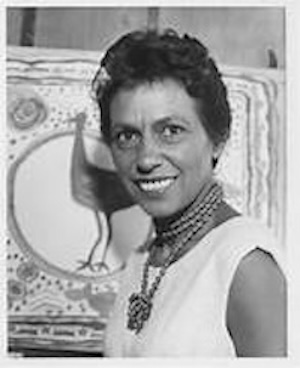
Oodgeroo Noonuccal:
Kath Walker: rebel+humour

Ballad of the Totems
My father was Noonuccal man and kept old tribal way,
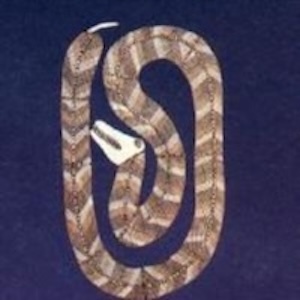
His totem was the Carpet Snake, whom none must ever slay;
But mother was of Peewee clan, and loudly she expressed
The daring view that carpet snakes were nothing but a pest.
Now one lived inside with us in full immunity,
For no one dared to interfere with father’s stern decree:
A mighty fellow ten feet long, and as we lay in bed
We kids could watch him round a beam not far above our head.
Only the dog was scared of him, we’d hear its whines and growls,
But mother fiercely hated him because he took her fowls.
You should have heard her diatribes that flowed in angry torrents,
With words you’d never see in print, except in D.H. Lawrence.
“I kill that robber,” she would scream, fierce as a spotted cat;
“You see that bulge inside of him? My speckly hen make that!”
But father’s loud and strict command made even mother quake;
I think he’d sooner kill a man than kill a carpet snake.
That reptile was a greedy guts, and as each bulge digested
He’d come down on the hunt at night, as appetite suggested.
We heard his stealthy slithering sound across the earthen floor,
While the dog gave a startled yelp and bolted out the door.
Then over in the chicken-yard hysterical fowls gave tongue,
Loud frantic squawks accompanied by the barking of the mung,
Until at last the racket passed, and then to solve the riddle,
Next morning he was back up there with a new bulge in his middle.
When father died we wailed and cried, our grief was deep and sore,
And strange to say from that sad day the snake was seen no more.
The wise old men explained to us: “It was his tribal brother,
And that is why it done a guy” – but some looked hard at mother.
She seemed to have a secret smile, her eyes were smug and wary,
She looked about as innocent as the cat that ate the pet canary.
We never knew, but anyhow (to end this tragic rhyme)
I think we all had snake for tea one day about that time.
No More Boomerang
No more boomerang
No more spear;
Now all civilized—colour bar and beer.
No more corroberee,
Gay dance and din.
Now we got movies,
And pay to go in.
No more sharing
What the hunter brings,
Now we work for money,
Then pay it back for things.
Now we track bosses
To catch a few bob.
Now we go walkabout
On bus to the job.
One time naked,
Who never knew shame;
Now we put clothes on
To hide whatsaname.


Leave A Comment