
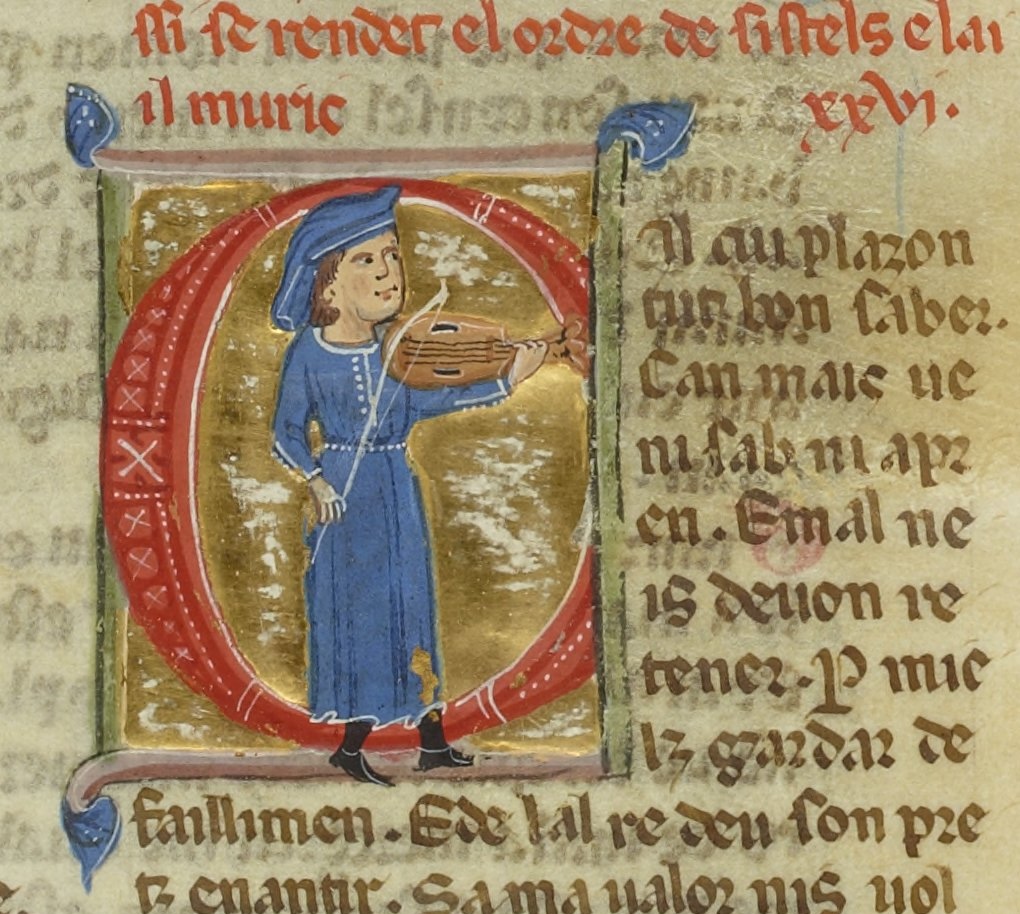
John Donne: Metaphysical Poet: He wrote to God like he did to his lover
The Good Morrow
I wonder by my troth, what thou and I
Did, till we loved? Were we not weaned till then?
But sucked
I on country pleasures, childishly?
Or snorted we in the Seven Sleepers’ den?
’Twas so; but this, all pleasures fancies be.
If ever any beauty I did see,
Which I desired, and got, ’twas but a dream of thee …
A Valediction Forbidding Mourning
As virtuous men pass mildly away,
And whisper to their souls to go,
Whilst some of their sad friends do say
The breath goes now, and some say, No:
So let us melt, and make no noise,
No tear-floods, nor sigh-tempests move;
Twere profanation of our joys
To tell the laity our love …
Batter My Heart, three-person’d God
Batter My Heart, three-person’d God, for you
As yet but knock, breathe, shine, and seek to mend;
That I may rise and stand, o’erthrow me, and bend
Your force to break, blow, burn, and make me new.
I, like an usurp’d town to another due,
Labour to admit you, but oh, to no end;
Reason, your viceroy in me, should defend,
But is captiv’d, and proves weak or untrue.
The Metaphysical Poets
Metaphysical poetry is a blend of emotion and intellectual ingenuity, characterized by “conceit” or “wit”—that is, by the odd and often jarring combination of apparently unconnected ideas and things. A metaphysical conceit usually sets up an analogy between one figure’s spiritual qualities and an object in the physical world and sometimes controls the poem’s entire structure. The goal is to jolt readers out of their complacency and force them to think through the argument of the poem.
https://www.britannica.com/topic/
The-Metaphysical-Poets
Another Metaphysical Poet

Andrew Marvell
To His Coy Mistress
Had we but world enough and time,
This coyness, lady, were no crime.
We would sit down, and think which way
To walk, and pass our long love’s day.
Thou by the Indian Ganges’ side
Shouldst rubies find; I by the tide
Of Humber would complain. I would
Love you ten years before the flood,
And you should, if you please, refuse
Till the conversion of the Jews.
My vegetable love should grow
Vaster than empires and more slow;
An hundred years should go to praise
Thine eyes, and on thy forehead gaze;
Two hundred to adore each breast,
But thirty thousand to the rest;
An age at least to every part,
And the last age should show your heart.
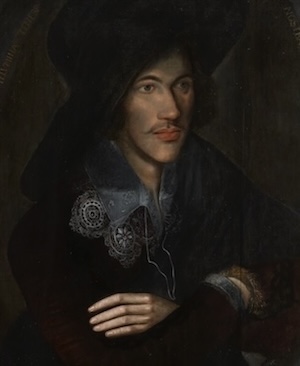
Samuel Johnson coined the term "metaphysical poets" in his 1779 work Lives of the Most Eminent English Poets to describe a loose group of 17th-century writers
The Canonisation by John Donne
For God’s sake hold your tongue, and let me love,
Or chide my palsy, or my gout,
My five gray hairs, or ruined fortune flout,
With wealth your state, your mind with arts improve,
Take you a course, get you a place,
Observe his honour, or his grace,
Or the king’s real, or his stampèd face
Contemplate; what you will, approve,
So you will let me love
The Sun Rising
Busy old fool, unruly sun,
Why dost thou thus,
Through windows, and through curtains call on us?
Must to thy motions lovers’ seasons run?
Saucy pedantic wretch, go chide
Late school boys and sour prentices,
Go tell court huntsmen that the king will ride,
Call country ants to harvest offices,
Love, all alike, no season knows nor clime,
Nor hours, days, months, which are the rags of time …
T.S. Eliot, American/English poet, was much more favourable in his reviews of the “metaphysical poets” than Johnson had been when Eliot wrote about them over a century later.
In an essay Eliot argues that the work of these poets, especially Donne and Marvell, embodies a fusion of thought and feeling that later poets were unable to achieve.
For, lady, you deserve this state,
Nor would I love at lower rate.
But at my back I always hear
Time’s wingèd chariot hurrying near;
And yonder all before us lie
Deserts of vast eternity.
Thy beauty shall no more be found;
Nor, in thy marble vault, shall sound
My echoing song; then worms shall try
That long-preserved virginity,
And your quaint honour turn to dust,
And into ashes all my lust;
The grave’s a fine and private place,
But none, I think, do there embrace.
Now therefore, while the youthful hue
Sits on thy skin like morning dew,
And while thy willing soul transpires
At every pore with instant fires,
Now let us sport us while we may,
And now, like amorous birds of prey,
Rather at once our time devour
Than languish in his slow-chapped power.
Let us roll all our strength and all
Our sweetness up into one ball,
And tear our pleasures with rough strife
Through the iron gates of life:
Thus, though we cannot make our sun
Stand still, yet we will make him run.
A Difficult Life
John Donne was born in London in 1571 or 1572, into a Roman Catholic family when practice of that religion was illegal in England.
During and after his university education, Donne spent much of his considerable inheritance on women, literature, pastimes and travel. Donne travelled across Europe and stayed some years in Italy and Spain, learning to speak the languages.
Back in England, Donne fell in love with his sponser, Egerton’s niece, Anne More. They were secretly married just before Christmas in 1601, against the wishes of both Egerton and Anne’s father. Upon discovery, this wedding ruined Donne’s career, getting him dismissed and put in prison along with the Church of England priest, Samuel Brooke who married them. Donne was released shortly thereafter when the marriage was proved to be valid. When Donne wrote to his wife to tell her about losing his post, he wrote after his name: John Donne, Anne Donne, Un-done. It was not until 1609 that Donne was reconciled with his father-in-law and received his wife’s dowry.
They lived in Surrey, where he scraped a meagre living as a lawyer, while Anne Donne bore twelve children during sixteen years of marriage. Though he also worked as an assistant pamphleteer writing anti-Catholic pamphlets, Donne was in a constant state of financial insecurity.
During a convalescence he wrote a series of meditations and prayers on health, pain and sickness that were published as a book in 1624 under the title of “Devotions”. One of these, Meditation XVII contains the well-known phrases “No Man Is An Island” and “For Whom the Bell Tolls”.
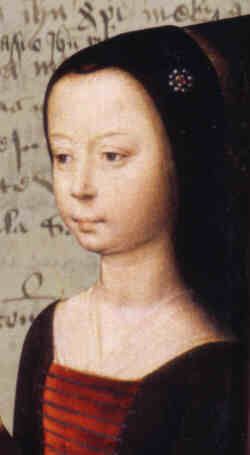
Anne More
About Marvell
“To His Coy Mistress”, Marvell’s most celebrated poem, combines an old poetic conceit (the persuasion of the speaker’s lover by means of a carpe diem lyric tradition and philosophy) with Marvell’s typically vibrant imagery and easy command of rhyming couplets. Other works incorporate topical satire and religious themes.
He adopted familiar forms and infused them with his unique conceits, analogies, reflections and preoccupations with larger questions about life and death.
T.S. Eliot wrote of Marvell’s style that “It is more than a technical accomplishment, or the vocabulary and syntax of an epoch; it is, what we have designated tentatively as wit, a tough reasonableness beneath the slight lyric grace”. He also identified Marvell and the metaphysical school with the “dissociation of sensibility” that occurred in 17th-century English literature. Eliot described this trend as “something which … happened to the mind of England…it is the difference between the intellectual poet and the reflective poet. (Wikipedia)




Leave A Comment